
by Ilse Gebhard, KAWO member
Ilse’s Gebhard’s essays are available in a digital book, Without a Net: Adventures with Butterflies and Moths, published by KAWO.
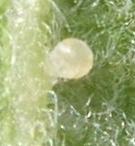
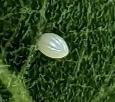
Milkweeds are named for the white sap they give off when they are injured, like when a leaf is broken off. Even a pinhole in a leaf causes a minute bit of sap to ooze out, producing a tiny globule which can be confused for the egg of a monarch (Danaus plexippus) butterfly.
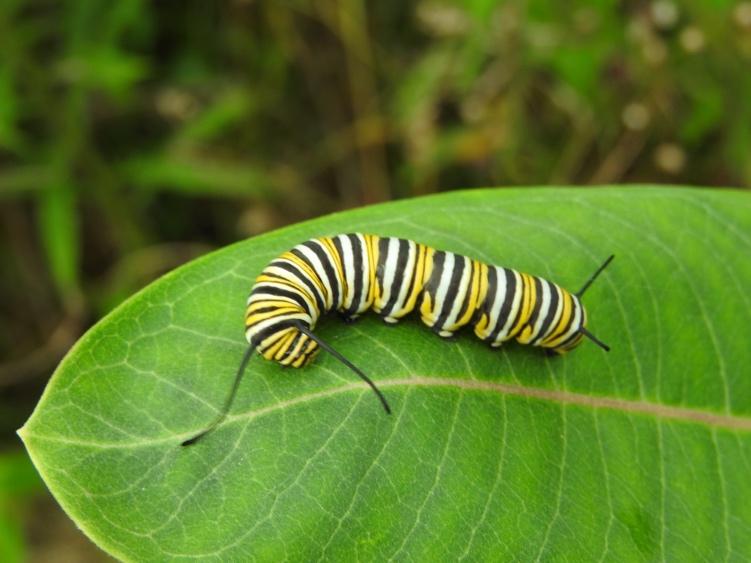
The sap is commonly referred to as latex and contains compounds known as cardiac glycosides that are toxic to most animals that feed on them. But some insects have evolved to tolerate the toxic compounds, and even store them in their bodies, making these insects themselves toxic to animals that feed on them, like birds. The best-known example is the caterpillar of the monarch butterfly, which retains its toxicity in the chrysalis and adult butterfly stages.
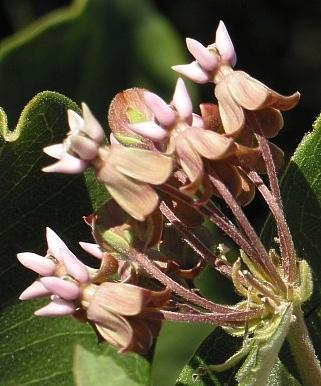
There are seventy-three species of native milkweeds in the United States, eleven of which are native to Michigan. Of the eleven, six are quite rare. The five more common species are whorled, poke, common, swamp, and butterfly milkweeds. Of those, the latter three species are the most readily available at native plant nurseries. While these three species look very different from each other overall, their individual flowers, growing in clusters, are structured similarly—the petals are bent back toward the stem, exposing the upward-pointing parts, called horns.
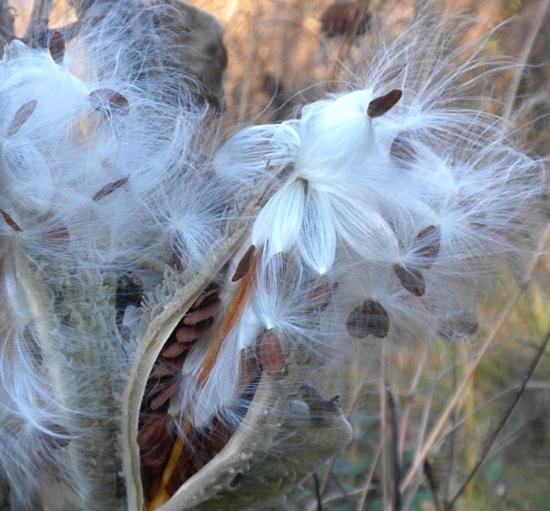
All three of these milkweed species require sun to part shade to produce flowers and are excellent nectar sources for pollinators. The seeds develop inside pods and are attached to fine, white hair tufts called floss. When the pods crack open in late fall, the hair tufts help the seeds to be dispersed by the wind. The seeds require a period of cold, moist conditions before they germinate.
Common Milkweed
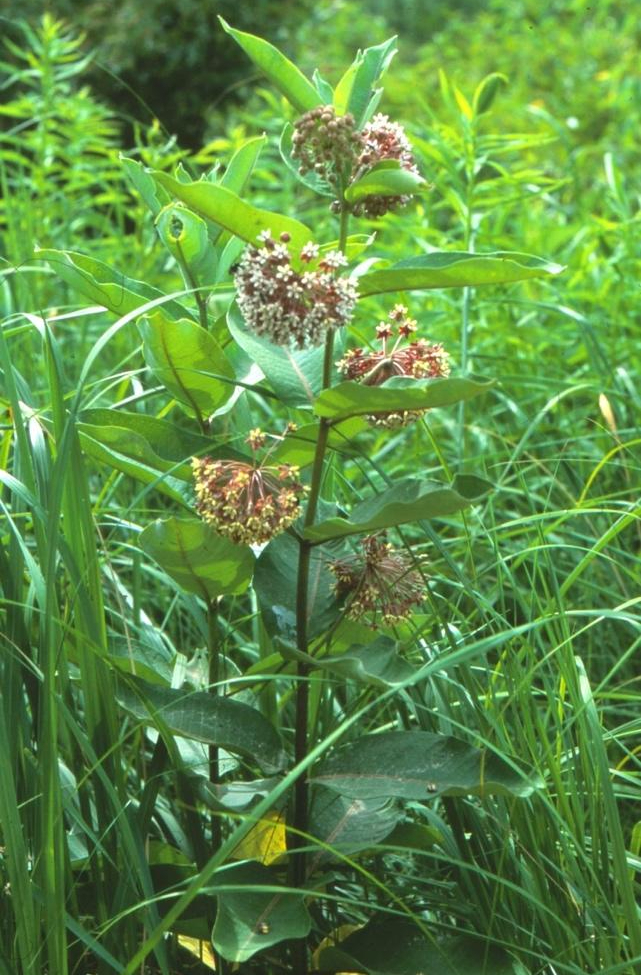
Common milkweed (Asclepias syriaca) is the species most often encountered in the wild. For one thing, it does well in disturbed soil—the reason it flourished in tilled fields before herbicide resistant crops were developed. The loss of common milkweed due to herbicide spraying is one of the reasons for the monarch butterfly decline. Common milkweed tolerates dry to wet conditions, except standing water. It grows to a height of 2–5 feet and blooms June to August. Its flowers are light pink. It spreads by rhizomes to form stands of clones, which is great for large, open areas but maybe too aggressive for a small garden bed. Its leaves attach to the stem opposite to each other and are somewhat hairy on the underside. Studies have shown that monarch caterpillars prefer it over swamp and butterfly milkweeds.
Swamp Milkweed
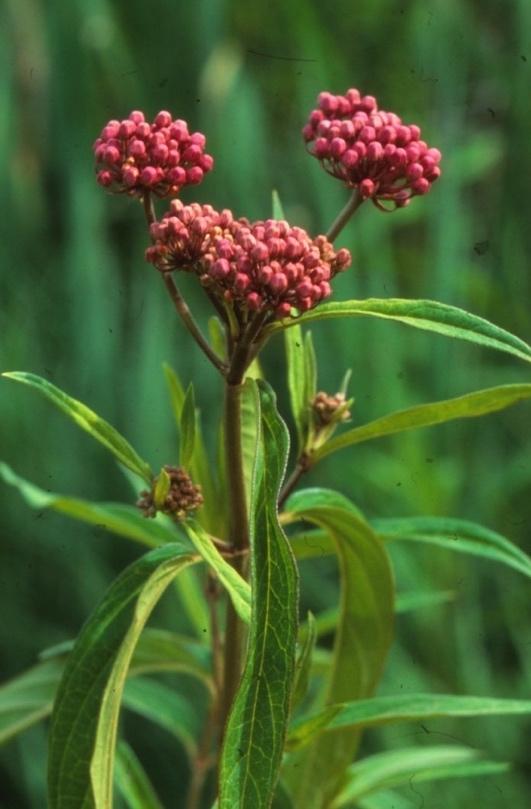
Swamp milkweed (Asclepias incarnata) prefers wet soils in the wild, including occasional standing water, but it adapts to good garden soil if watered during dry spells. Another common name for it is rose milkweed, dispelling the notion that it needs a swamp to grow. It grows to a height of 3–4 feet and forms a multi-stemmed clump from its root ball. Its pink to rose-purple flowers bloom June to August. The leaves, attached to the stem opposite each other, are hairless. The absence of hairs gives swamp milkweed leaves the finest texture of the three species.
Butterfly Weed
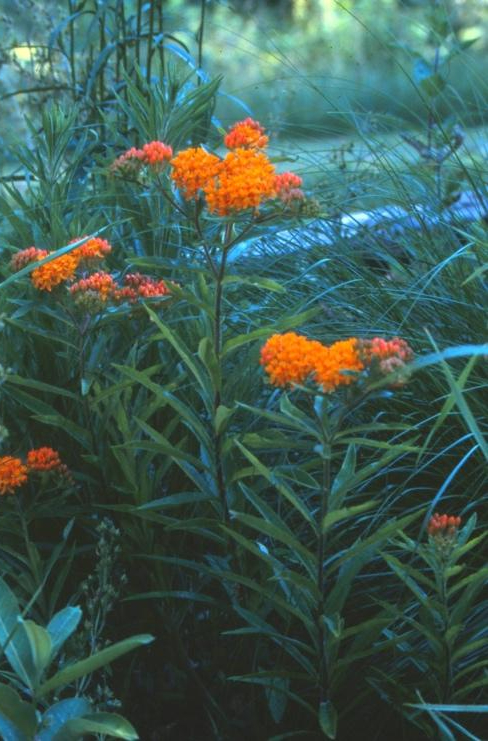
Butterfly weed (Asclepias tuberosa) is typically found in the wild in sandy soil or on slopes. It has a large, deep taproot, making it highly drought resistant. It grows to a height of 1.5–3 feet and forms a multi-stemmed clump. Its bright orange flowers bloom June to July. Unlike the other two species, its leaves are attached not in pairs but singly, alternating along the stem. The underside of the leaves is densely hairy, which is thought to be the reason monarchs prefer to lay their eggs on the other two species.