
by Ilse Gebhard, KAWO member
Ilse’s Gebhard’s essays are available in a digital book, Without a Net: Adventures with Butterflies and Moths, published by KAWO.
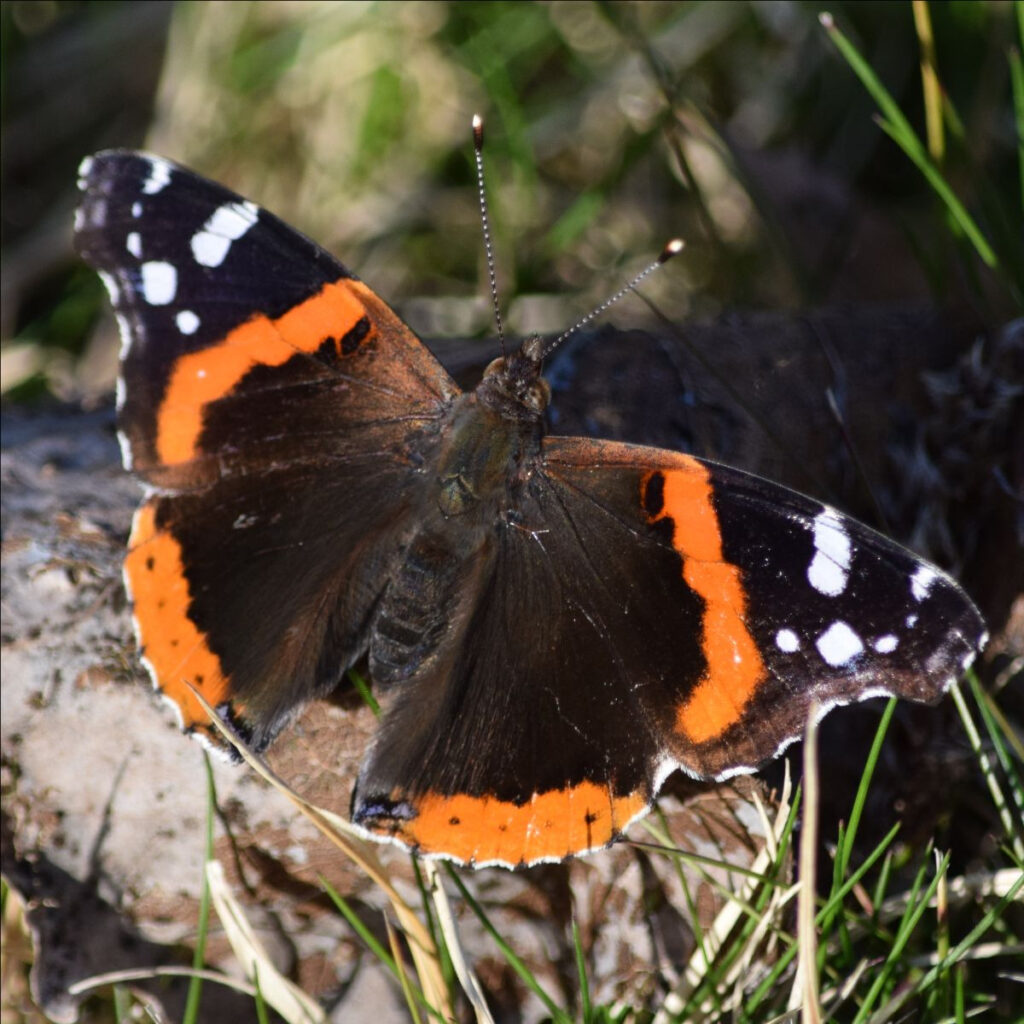
Some years are banner years for red admiral (Vanessa atalanta) butterflies. Labeled an “irruptive” species, they are cold intolerant and overwinter in the far South and Southwest to re-colonize the northern regions to varying degrees each year as spring advances. They can’t be too cold intolerant, though, since my earliest sighting is April 19.
It is wonderful to see red admirals with their flashy red diagonal bands crossing the forewings and red bands on the lower edges of the hindwings on those sunny days in late April and early May when few butterflies are out. They are fast fliers, so the best way to identify them is when they bask in the sun with their wings outspread before they are warm enough to fly.
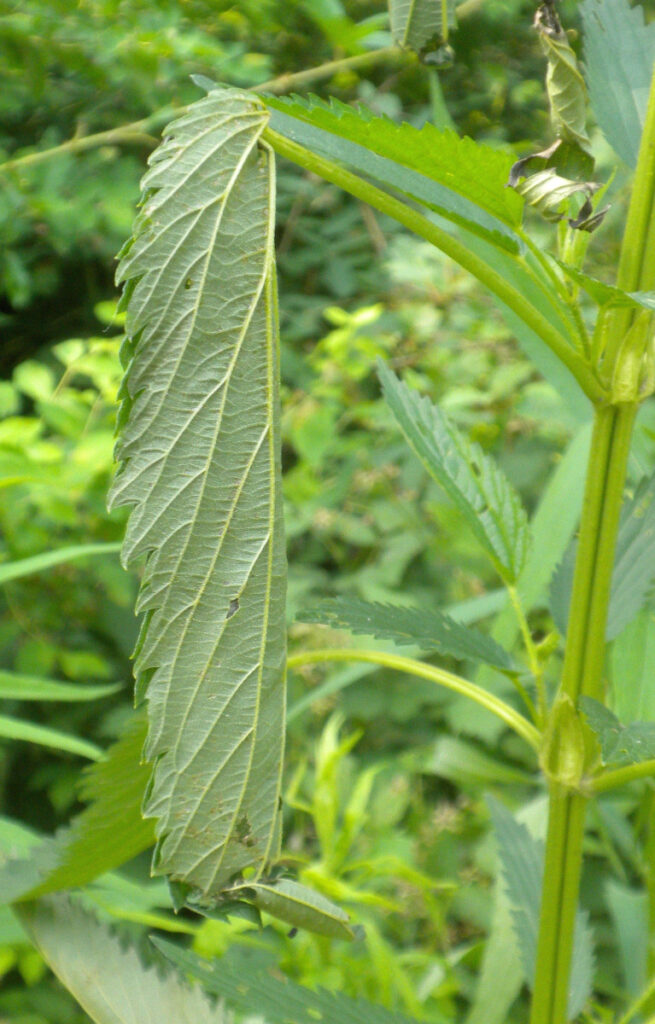
In early June 2004, a banner year for red admirals in our area, I had the good fortune to be walking with monarch butterfly expert Dr. Karen Oberhauser and she taught me how to look for red admiral caterpillars. Their host plants are nettles and they hide and feed in shelters they make by “zipping” together the edges of nettle leaves.
In the ensuing weeks I collected sixteen caterpillars, from tiny one-eighth-inch first instars (larval stages) to one-and-a-quarter-inch last instars. Walking through thickets of stinging nettle with exposed skin can result in pain persisting for several hours, so I covered up and wore gloves to collect the folded-up leaves. The young larvae were entirely black, but the bodies of later instars were either brown, gray or green with black heads and a band of yellow half-moons on either side. Overall they appeared dark because they were covered with spines with pointed black branches.
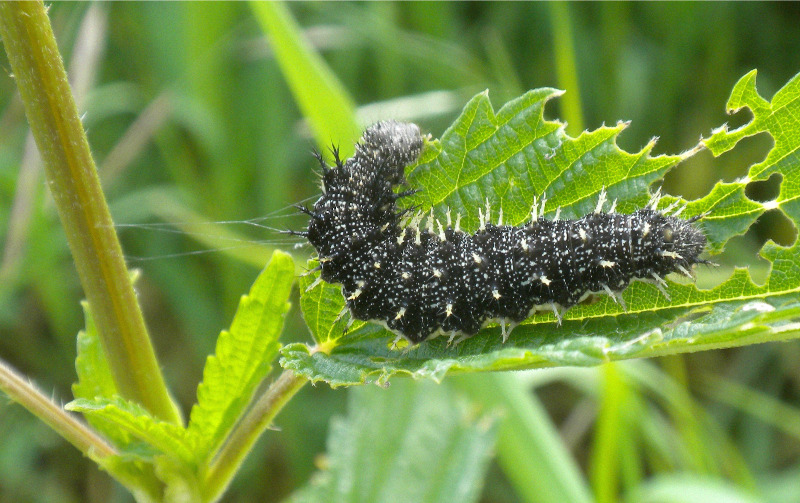
The eight later instar caterpillars happily munched on nettle leaves, formed beautiful tan chrysalises with golden spots, and eventually emerged as butterflies. There seemed to be a problem, though, with most of the real tiny caterpillars. Seven of them did not appear to be eating, as evidenced by lack of frass, and didn’t emerge from their shriveled-up leaf shelter to move to the fresh leaves I provided. After several days I carefully pried open the shelters and found the reason for their inactivity—they were dead!
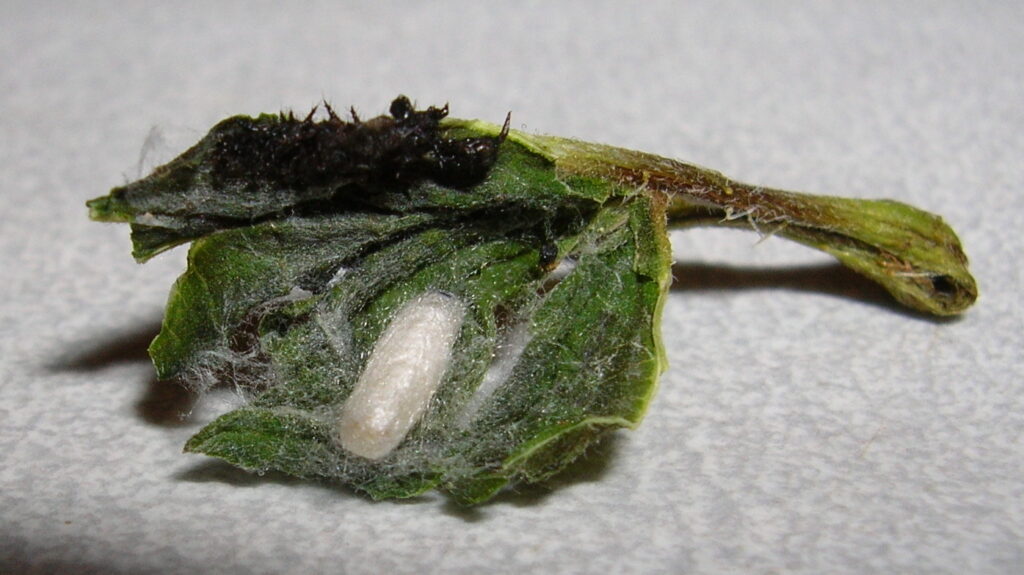
The tiny caterpillars had been parasitized and right next to six of them was a white cocoon the same size, namely one-eighth inch. Cocoon formation was incomplete for the seventh one and I watched the tiny white grub spin its cocoon. A ten- to thirty-power microscope is nice for such viewing, although a hand lens or magnifying glass can be used. While I have become very fond of herbivorous moth and butterfly caterpillars, I still get that “yuk” feeling when confronted with carnivorous parasitic fly and wasp larva. That is when I need to remind myself about nature’s checks and balances.
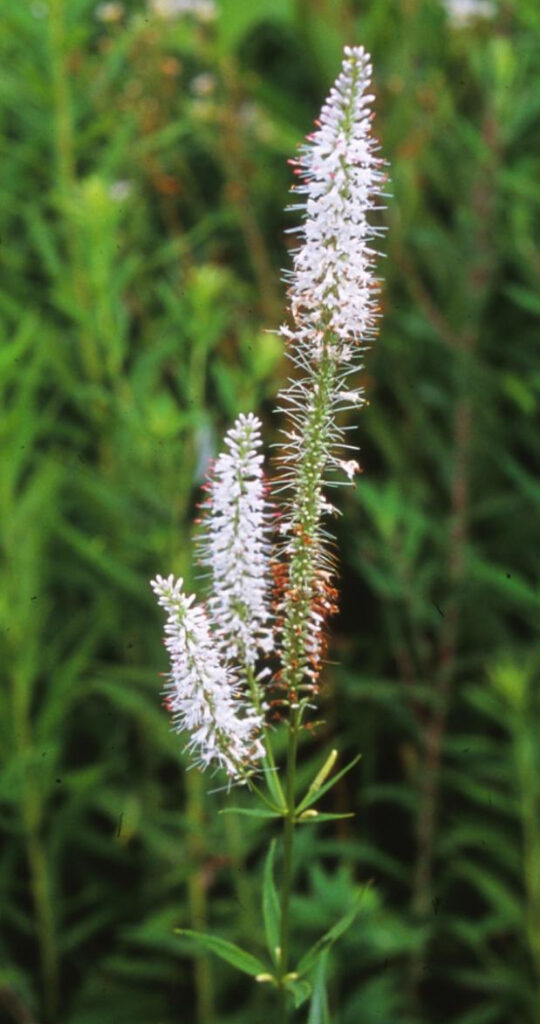
About a week later, over a period of several days, one-eighth-inch parasitic wasps emerged from six of the seven cocoons, which I froze for identification. They had long antenna and two had formidable tube-like appendages at their rear ends. These ovipositors, used for laying eggs, indicated that these wasps were females. In the case of parasitic wasps, the ovipositors are also piercing organs to penetrate their host larvae. They were braconid wasps, but it would require an expert to further pin down the species. One of the native plants by our deck is Culver’s root (Veronicastrum virginicum), whose tiny white tubular flowers are in dense clusters of tapering, candle-like spikes. It is very showy, always abuzz with many small insects, and apparently a good nectar source for at least one red admiral. One afternoon, while taking a break from weeding, I watched one for half an hour as it spiraled up spike after spike, inserting its proboscis in each tiny flower. I like to think it was one of the butterflies I had released and was showing off for me.