
Not All Are Lucky
by Ilse Gebhard, KAWO member
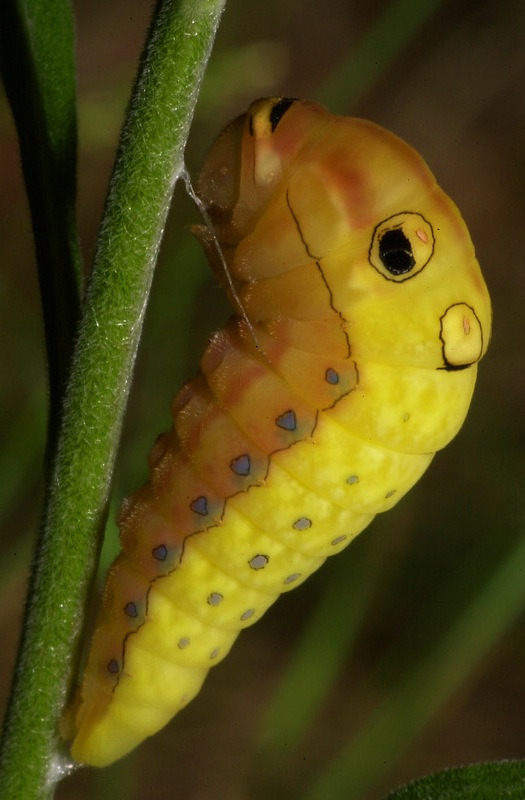
About twenty-five years ago the word got out—Ilse likes creepy, crawly caterpillars and whatever they turn into. Consequently, I have been on the receiving end of some wonderful gifts of nature from friends who love and want to protect our natural world. Egg, larval, and pupal stages of swallowtail butterflies have been among them.
The message from my friend down the street was, “if you want a spicebush swallowtail (Papilio troilus) butterfly caterpillar, come on over. Hubby is in the front yard taking photos of it.” Knowing that my back would enjoy a break from weeding, I jumped into the car. Sure enough, here he was, prostrate on the ground doing what he does so well—taking wonderful pictures of flowers and critters.
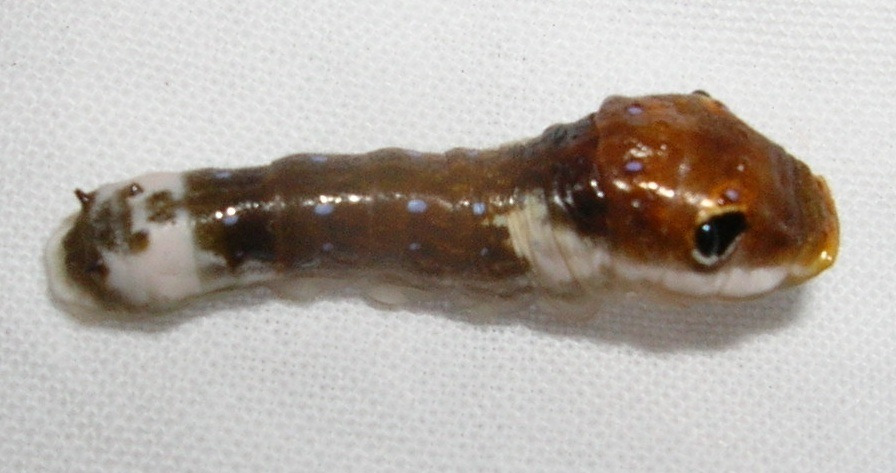
The caterpillar was in the process of spinning the two very fine silken strands by which it was attaching itself to a goldenrod stem. This process just precedes the transformation of caterpillar to chrysalis. Merely inches above the ground, the caterpillar apparently thought this a perfect spot to spend its chrysalis stage, but I’m not so sure the photographer agreed on this 90ºF, 100% humidity mid-July day.
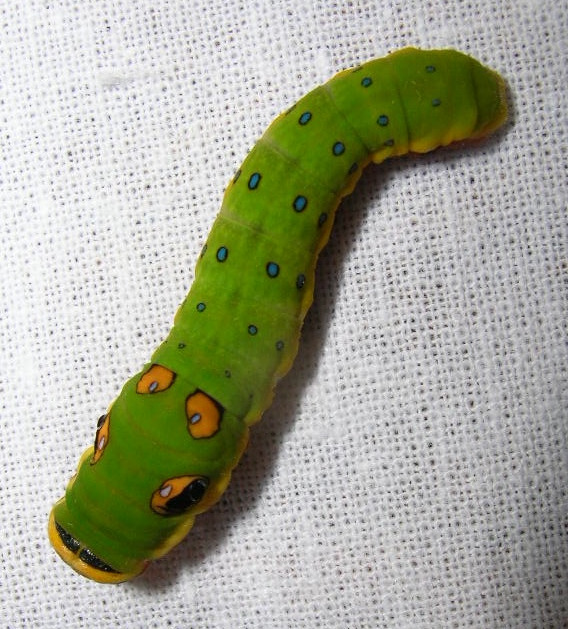
The spicebush caterpillar’s host plants are not only its namesake spicebush (Lindera benzoin), but also sassafras (Sassafras albidum), of which there were several in the area. The first three instars resemble bird droppings, while the last two instars are green with two orange and black spots like pupiled eyes on the thorax and two yellow spots right behind on the abdomen, followed by four lines of small blue spots in the middle of the back. Just before pupating the caterpillar turns yellow or orange, as in the photo above.
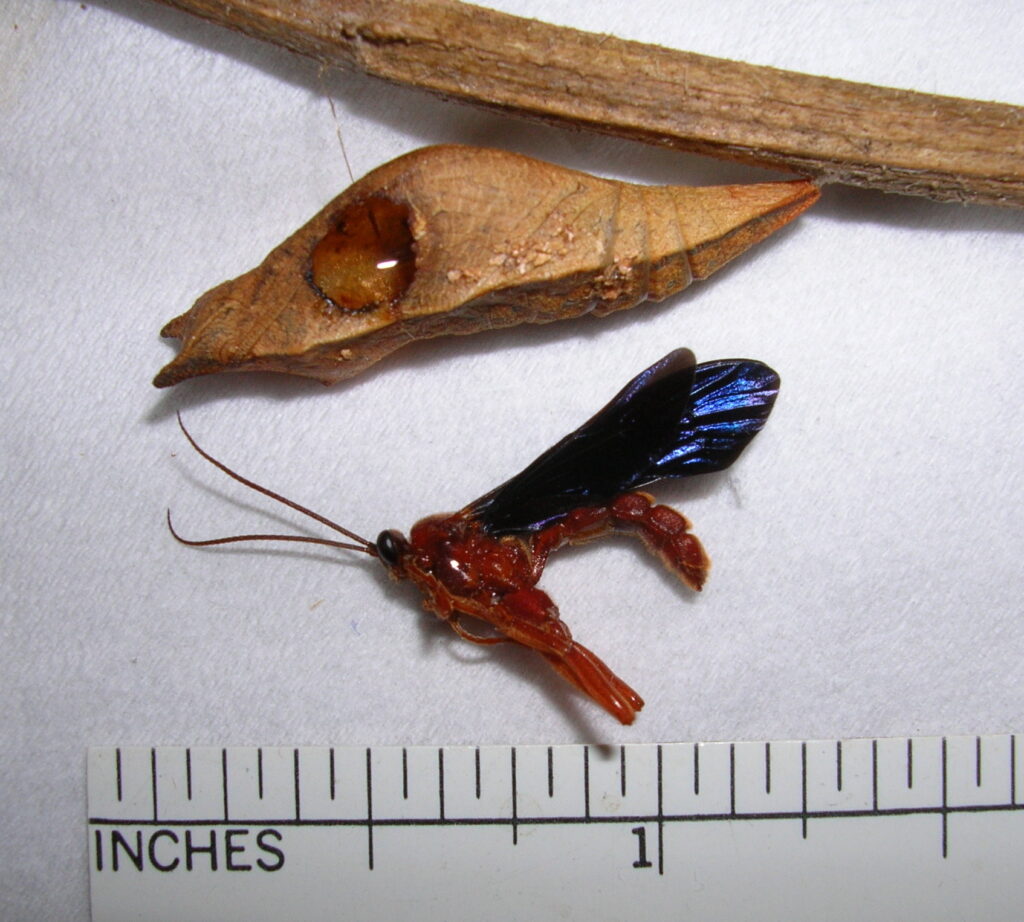
I had hoped to see the chrysalis formation, but I have to sleep sometime. Overnight the attached caterpillar had formed its tan and brown mottled chrysalis—from which twenty-one days later emerged the bane of swallowtails, an ichneumon wasp. The caterpillar had been parasitized.
A similar fate had befallen another spicebush caterpillar given to me by a friend the previous fall. After I carefully overwintered it at the chrysalis stage, the same wasp species emerged on May 16. The caterpillar had been parasitized in the fall, hosting the wasp all winter.
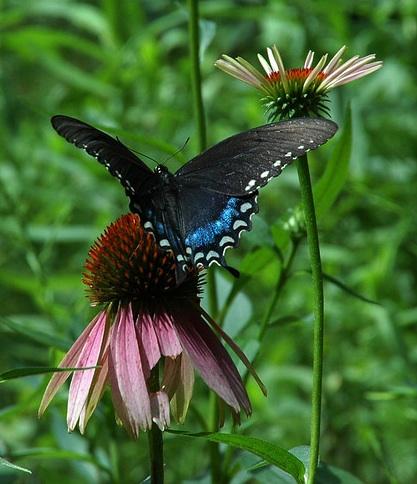
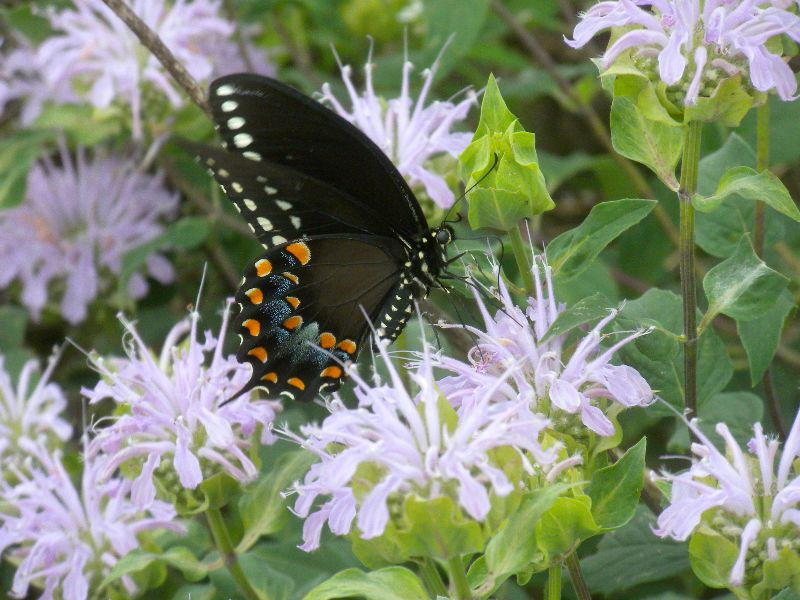
Since that time I have successfully raised several “Spicies.” I learned to look for early instars inside spicebush and sassafras leaves that are folded over, where they are hiding from predators and potential parasitic wasps. The smaller they are, the less likely they have been parasitized. To distinguish the spicebush swallowtail from the similar-looking pipevine, black, and black-form female eastern tiger swallowtails, it is best if you can see both the upper and lower sides of the wings.
All photos by Ilse Gebhard.